
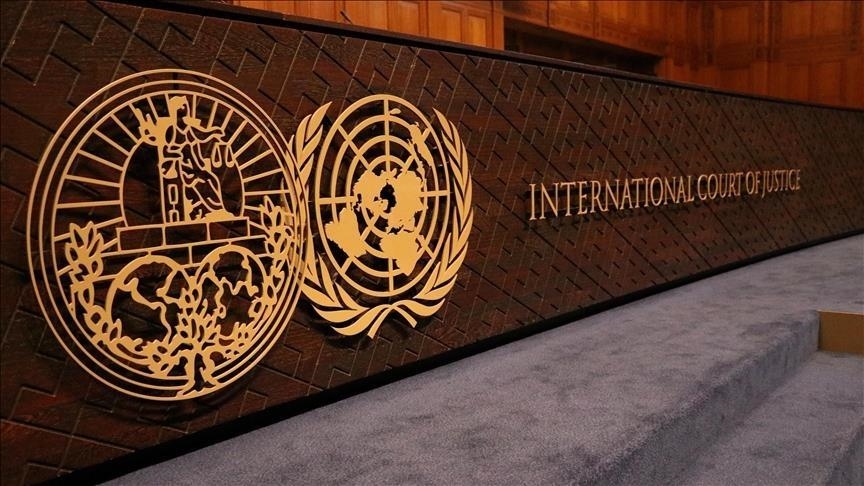
In a landmark decision delivered on July 23, the International Court of Justice (ICJ) outlined a comprehensive set of stringent legal obligations requiring States to exercise due diligence to ensure climate protection, undertake enhanced action on National Determined Contributions (to reducing Greenhouse Gas Emissions) and strengthen international cooperation to protect the climate. The ICJ also affirmed legal obligations requiring the States most responsible for Greenhouse Gas emissions (Annex 1 countries) to provide reparations to States most impacted by climate change, particularly developing countries.
The case had been brought to the court by the United Nations General Assembly following a global campaign led by youth from Pacific Island Students Fighting Climate Change and World’s Youth for Climate Justice.
In delivering the opinion, the ICJ President Judge Iwasawa Yuji noted that the questions posed to the court by the General Assembly concerned “an existential problem of planetary proportions that imperils all forms of life and the very health of our planet.”
The Court affirmed a wide range obligations under both treaty law and customary law (which is applicable universally) to ensure global average temperature increase remains below 1.5 degrees Celsius above the pre-industrial average, and to respond to the human rights implications of climate change.
This includes responsibilities of States to “use all means at their disposal to prevent activities carried out within their jurisdiction or control from causing significant harm to the climate system.” The ICJ did not qualify (limit) this obligation with caveats that this needs to be balanced against economic wealth/growth (a common excuse for inaction by States). Indeed, the court highlighted that governments have a responsibility to regulate the private sector in order to reduce and reverse the impact of economic activity on the climate.
The court strongly affirmed the application of human rights law to climate protection, including human rights agreements and customary principles of human rights law. These principles, repeated a number of times in the decision, include equity, intergenerational equity and sustainable development.
The interconnection between human rights law and the the issue of climate change was emphasized by the President of the ICJ who noted that “The environment is foundation of human life on which both present and future generations depend. The protection of the environment is a precondition for the full enjoyment of human rights.”
The significance of the ICJ decision has been recognized by main-stream media around the world.
- The Guardian suggests that this ‘landmark opinion’ means that “those governments that fail to prevent climate harm could be liable for compensation and restitution.”
- Reuters reports that the “Top UN court says treaties compel wealthy nations to curb global warming.”
- Al Jazeera reports that “The United Nations’ highest court has said that countries must meet their climate obligations – and that failing to do so could violate international law, potentially opening the door for affected nations to seek reparations in future legal cases.”
- The New York Times in Does the World Court’s Sweeping Climate Opinion Matter? answers cynics who question the impact of an ICJ Advisory Opinion, by noting that even in the face of reluctant governments (like the USA) the opinion could assist domestic law suits, reduce government support for fossil fuels, and assist in building compensation for developing countries most impacted.
- The BBC says that the court’s decision opens the door to ‘countries suing each other over climate change.’
- The International Union for the Conservation of Nature welcomes the courts historic Advisory Opinion and notes that it affirms the obligation of States under international law “to act with a stringent level of due diligence to prevent global warming from exceeding the 1.5°C threshold.”
- Greenpeace noted that the World’s highest court has delivered “historic protections for climate-impacted communities.”
The decision will be followed-up by the UN General Assembly in a resolution currently being drafted by Vanuatu and the other cosponsors of the 2023 UNGA resolution which requested the advisory opinion. But more than that, the decision will impact on all international forums addressing climate change, as well as national policies, subsequent climate cases in national and regional courts, and the global climate action movement, which now has strong and clear law on its side.